
Nigerian Capital Gains Tax 2025: The Complete Guide for Investors
Everything Nigerian investors need to know about Capital Gains Tax under the 2025 Finance Act — dual thresholds, FIFO calculations, exemptions, and how to stay compliant.
Introduction: Why Capital Gains Tax Matters for Nigerian Investors
If you trade stocks on the Nigerian Stock Exchange (NGX), invest through platforms like Bamboo or Chaka, or hold any disposable assets in Nigeria, Capital Gains Tax (CGT) is something you cannot afford to ignore. The 2025 Finance Act introduced sweeping changes to how CGT is calculated and applied in Nigeria, replacing the old flat-rate system with a dual threshold approach.
For many Nigerian investors, the good news is that the new system actually shields smaller portfolios from CGT entirely. But for active traders and high-net-worth individuals, the stakes are higher than ever. A 30% tax rate on capital gains --- when it applies --- can sharply reduce your returns, especially when you factor in Nigeria's persistently high inflation.
This guide breaks down everything you need to know: what changed, how the new thresholds work, how to calculate your cost basis using the legally required FIFO method, and practical strategies to stay compliant without overpaying.
The 2025 Finance Act: What Changed
Before the 2025 Finance Act, Nigeria's CGT regime was relatively straightforward. Capital gains on the disposal of assets (including shares) were taxed at a flat rate of 10%, with certain exemptions. While this was simple, it was widely considered outdated and poorly enforced, particularly for securities transactions.
The 2025 Finance Act overhauled this system in several important ways:
- The tax rate increased from 10% to 30% on qualifying capital gains
- A dual threshold system was introduced, meaning CGT only applies when both a proceeds threshold and a gains threshold are exceeded
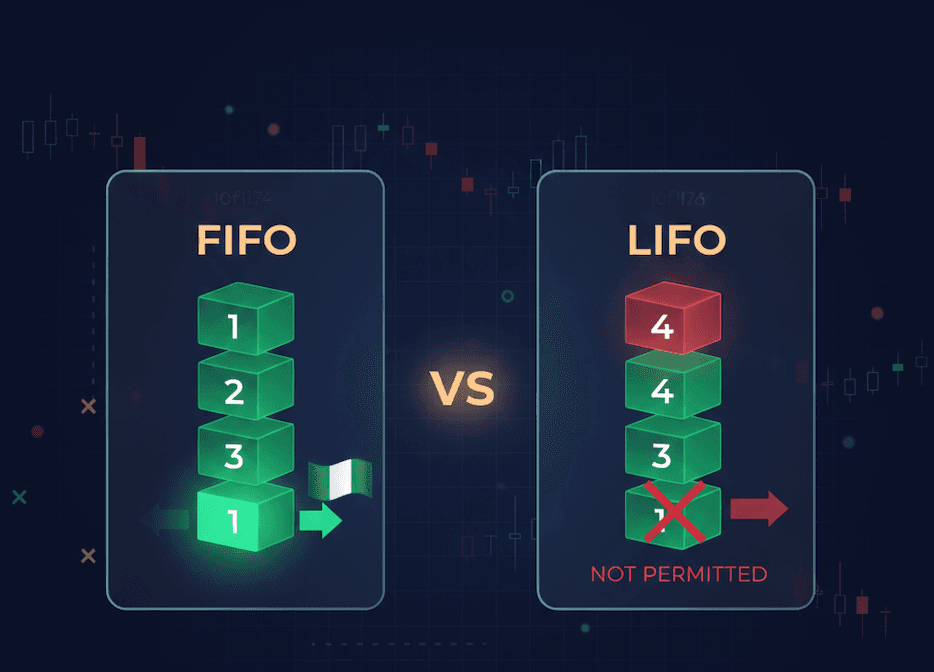
- FIFO (First In, First Out) was formally mandated as the cost basis calculation method for securities
- The Nigeria Revenue Service (NRS) was given stronger enforcement powers and reporting mechanisms
The net effect is a system that exempts the majority of retail investors while imposing a much higher rate on larger, more active portfolios. Understanding exactly where you fall is critical.
The Dual Threshold System Explained
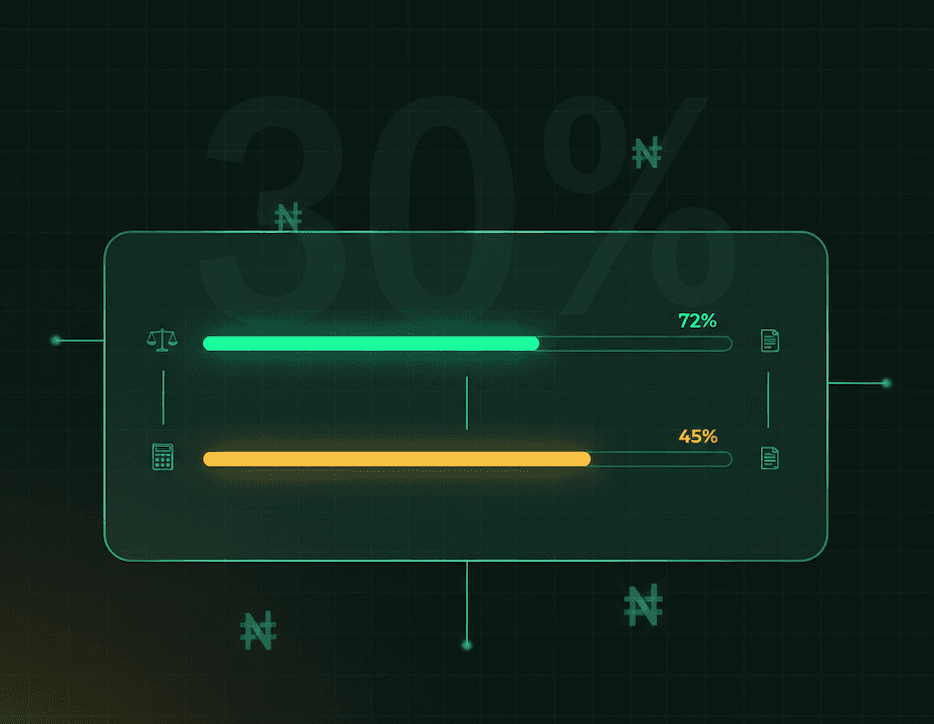
The centrepiece of the 2025 Finance Act's CGT reforms is the dual threshold system. Unlike the old regime, where any capital gain could theoretically trigger a tax liability, the new system requires that both of two independent thresholds be exceeded before any CGT is owed.
Threshold 1: The Proceeds Threshold --- ₦150,000,000
The first threshold looks at your total sale proceeds --- the gross amount you receive from selling or disposing of assets. This is measured over a 12-month rolling window, not a calendar year.
Key details:
| Aspect | Detail |
|---|---|
| Amount | ₦150,000,000 |
| Measurement period | 12-month rolling window from any disposal date |
| What counts | Total proceeds (sale price x quantity), not just gains |
| Scope | All disposable assets, including shares, property, and other investments |
For example, if you sell shares on 15 June 2025, the NRS looks at all your disposal proceeds from 15 June 2024 through 15 June 2025 to determine whether you have exceeded ₦150,000,000.
Threshold 2: The Gains Threshold --- ₦10,000,000
The second threshold looks at your net capital gains --- the actual profit you made after subtracting your cost basis from your sale proceeds. This is measured over a calendar year (1 January to 31 December).
Key details:
| Aspect | Detail |
|---|---|
| Amount | ₦10,000,000 |
| Measurement period | Calendar year (resets every 1 January) |
| What counts | Net gains (proceeds minus cost basis), after allowable deductions |
| Loss offset | Capital losses in the same year can reduce your net gains figure |
Both Thresholds Must Be Exceeded
This is the most important rule to understand: CGT at 30% applies only when both thresholds are exceeded simultaneously. If you exceed one but not the other, your CGT liability is ₦0.
Here is how the logic works:
| Proceeds (12-month) | Gains (Calendar Year) | CGT Liability |
|---|---|---|
| Below ₦150M | Below ₦10M | ₦0 |
| Above ₦150M | Below ₦10M | ₦0 |
| Below ₦150M | Above ₦10M | ₦0 |
| Above ₦150M | Above ₦10M | 30% of net gains |
This dual gate structure means that a trader who turns over a large volume of shares but makes modest gains (common in low-margin, high-frequency trading) may not owe any CGT. Conversely, an investor who makes substantial gains on a small number of transactions may also be exempt if their total proceeds stay below ₦150M.
When the 30% Rate Applies
When both thresholds are exceeded, the 30% rate applies to your entire net capital gains for the calendar year --- not just the amount above ₦10M. This is not a marginal rate; it is an all-or-nothing threshold. Once you cross both lines, all qualifying gains are taxed at 30%.
This makes it particularly important to track your positions carefully as you approach either threshold during the year.
FIFO: The Required Cost Basis Method
Nigeria's tax law requires the First In, First Out (FIFO) method for calculating the cost basis of securities. This means that when you sell shares, the cost basis used for calculating your gain or loss must correspond to the oldest shares you still hold in that security.
Why FIFO Matters
If you have accumulated shares in a company over multiple purchases at different prices, FIFO determines which purchase price is used to calculate your gain. This can make a significant difference to your tax liability.
FIFO Worked Example
Let us say you have been buying shares of Dangote Cement (DANGCEM) over several months:
| Date | Action | Quantity | Price per Share | Total Cost |
|---|---|---|---|---|
| 15 Jan 2025 | Buy | 500 | ₦280.00 | ₦140,000.00 |
| 10 Mar 2025 | Buy | 300 | ₦310.00 | ₦93,000.00 |
| 22 May 2025 | Buy | 200 | ₦345.00 | ₦69,000.00 |
You now hold 1,000 shares of DANGCEM with a total cost basis of ₦302,000.00.
On 15 August 2025, you sell 600 shares at ₦360.00 per share. Under FIFO, the cost basis is calculated as follows:
Step 1: The first 500 shares sold come from your oldest lot (15 Jan 2025, at ₦280.00 each):
- Proceeds: 500 x ₦360.00 = ₦180,000.00
- Cost basis: 500 x ₦280.00 = ₦140,000.00
- Gain: ₦40,000.00
Step 2: The remaining 100 shares sold come from your next oldest lot (10 Mar 2025, at ₦310.00 each):
- Proceeds: 100 x ₦360.00 = ₦36,000.00
- Cost basis: 100 x ₦310.00 = ₦31,000.00
- Gain: ₦5,000.00
Total gain on the sale: ₦40,000.00 + ₦5,000.00 = ₦45,000.00
After this sale, your remaining holdings are:
- 200 shares from 10 Mar 2025 at ₦310.00
- 200 shares from 22 May 2025 at ₦345.00
If you had used the average cost method (which is not permitted under Nigerian tax law), the gain would have been different. FIFO ensures consistency and prevents investors from cherry-picking favourable cost lots.
Full Worked Example: CGT Calculation Under the Dual Threshold System
Let us walk through a worked example to see how the dual threshold system and FIFO work together in practice.
The Scenario
Adaeze is an active trader on the NGX. During the 2025 calendar year, she makes the following transactions:
Purchases (accumulating positions throughout the year):
| Date | Stock | Quantity | Price | Total Cost |
|---|---|---|---|---|
| 05 Jan | GTCO | 10,000 | ₦42.50 | ₦425,000.00 |
| 12 Feb | MTNN | 5,000 | ₦230.00 | ₦1,150,000.00 |
| 20 Mar | DANGCEM | 8,000 | ₦290.00 | ₦2,320,000.00 |
| 15 Apr | GTCO | 15,000 | ₦38.00 | ₦570,000.00 |
| 01 Jun | BUACEMENT | 12,000 | ₦68.00 | ₦816,000.00 |
| 10 Aug | AIRTELAFRI | 3,000 | ₦2,100.00 | ₦6,300,000.00 |
Sales (disposals throughout the year):
| Date | Stock | Quantity | Sale Price | Proceeds |
|---|---|---|---|---|
| 15 May | GTCO | 25,000 | ₦48.00 | ₦1,200,000.00 |
| 01 Jul | MTNN | 5,000 | ₦260.00 | ₦1,300,000.00 |
| 20 Sep | DANGCEM | 8,000 | ₦380.00 | ₦3,040,000.00 |
| 10 Oct | BUACEMENT | 12,000 | ₦75.00 | ₦900,000.00 |
| 15 Nov | AIRTELAFRI | 3,000 | ₦2,450.00 | ₦7,350,000.00 |
(Note: Adaeze also has additional transactions in other securities throughout the year, bringing her total 12-month rolling proceeds to ₦200,000,000.00.)
Step 1: Calculate Total Proceeds (12-Month Rolling Window)
Adaeze's total disposal proceeds over the relevant 12-month period: ₦200,000,000.00
This exceeds the ₦150,000,000 proceeds threshold. The first gate is crossed.
Step 2: Calculate Net Capital Gains Using FIFO
GTCO Sale (15 May):
- Sold 25,000 shares at ₦48.00
- FIFO: First 10,000 from 05 Jan lot at ₦42.50, remaining 15,000 from 15 Apr lot at ₦38.00
- Gain: (10,000 x ₦5.50) + (15,000 x ₦10.00) = ₦55,000 + ₦150,000 = ₦205,000.00
MTNN Sale (01 Jul):
- Sold 5,000 shares at ₦260.00
- FIFO: All 5,000 from 12 Feb lot at ₦230.00
- Gain: 5,000 x ₦30.00 = ₦150,000.00
DANGCEM Sale (20 Sep):
- Sold 8,000 shares at ₦380.00
- FIFO: All 8,000 from 20 Mar lot at ₦290.00
- Gain: 8,000 x ₦90.00 = ₦720,000.00
BUACEMENT Sale (10 Oct):
- Sold 12,000 shares at ₦75.00
- FIFO: All 12,000 from 01 Jun lot at ₦68.00
- Gain: 12,000 x ₦7.00 = ₦84,000.00
AIRTELAFRI Sale (15 Nov):
- Sold 3,000 shares at ₦2,450.00
- FIFO: All 3,000 from 10 Aug lot at ₦2,100.00
- Gain: 3,000 x ₦350.00 = ₦1,050,000.00
Subtotal from these transactions: ₦2,209,000.00
Adaeze's additional transactions bring her total calendar-year net capital gains to ₦15,000,000.00.
This exceeds the ₦10,000,000 gains threshold. The second gate is crossed.
Step 3: Calculate CGT Liability
Both thresholds have been exceeded:
- Proceeds: ₦200,000,000 > ₦150,000,000 (exceeded)
- Gains: ₦15,000,000 > ₦10,000,000 (exceeded)
CGT = 30% x ₦15,000,000 = ₦4,500,000.00
Adaeze owes ₦4,500,000.00 in Capital Gains Tax for the 2025 tax year, due by 31 March 2026.
What If Only One Threshold Were Exceeded?
If Adaeze's total proceeds had been ₦140,000,000 instead of ₦200,000,000 (below the ₦150M threshold), her CGT would be ₦0 --- even though her gains exceeded ₦10M. The dual threshold system requires both conditions to be met.
What Is Exempt from CGT?
Not all asset disposals trigger CGT, even when both thresholds are exceeded. The following are generally exempt under Nigerian tax law:
Principal Private Residence
The sale of your main home is exempt from CGT, provided certain conditions are met. This exemption is designed to protect homeowners from being taxed on the appreciation of their primary dwelling.
Government Securities
Gains from the disposal of Nigerian government bonds and treasury bills are typically exempt from CGT. This includes Federal Government of Nigeria (FGN) Bonds, Treasury Bills, and Savings Bonds.
Personal-Use Assets
Assets acquired for personal use (not investment) may be exempt, though the definition is narrow and the NRS can challenge claims of personal use.
Life Insurance Proceeds
Proceeds from life insurance policies paid out on maturity or death are generally exempt.
Gifts to Certain Organisations
Assets donated to approved charitable, educational, or religious organisations may qualify for CGT exemption.
These exemptions apply to the nature of the asset or transaction, not to the investor. If you sell exempt government securities and taxable shares in the same year, only the shares contribute to your CGT thresholds and liability.
Tax-Loss Harvesting: A Strategy for Managing Your CGT Exposure
Tax-loss harvesting is the practice of strategically selling investments that are currently at a loss to offset capital gains elsewhere in your portfolio. Under the 2025 Finance Act, capital losses in a calendar year can be used to reduce your net capital gains figure --- potentially keeping you below the ₦10,000,000 gains threshold.
How It Works in Practice
Suppose you are approaching the gains threshold mid-year. You review your portfolio and identify positions that are currently underwater (trading below your cost basis). By selling those positions before year-end, you realise a capital loss that directly reduces your net gains.
For example:
- You have ₦12,000,000 in realised gains from profitable trades
- You hold a position in a stock that has lost ₦3,000,000 in value since purchase
- By selling that position, your net gains drop to ₦9,000,000 --- below the ₦10M threshold
- Result: ₦0 CGT liability instead of ₦3,600,000 (30% of ₦12M)
Important Considerations
- You must actually execute the sale to realise the loss; unrealised (paper) losses do not count
- Be mindful of the wash sale concept: if you sell a security at a loss and repurchase the same security shortly after, the NRS may disallow the loss
- Tax-loss harvesting is most effective when done proactively throughout the year, not as a last-minute scramble in December
- Always consider transaction costs (brokerage fees, SEC fees) when evaluating whether a harvesting trade makes financial sense
How Journaira Helps You Stay on Top of CGT
Tracking all of this manually --- across multiple brokers, hundreds of transactions, and shifting thresholds --- is time-consuming and error-prone. This is exactly the problem Journaira was built to solve.
Automatic FIFO Cost Basis Tracking
When you import your trades into Journaira (via CSV or PDF from your broker), the platform automatically applies FIFO to every sale, calculating your exact cost basis and capital gain or loss per transaction. No spreadsheets, no guesswork.
Dual Threshold Meters
Journaira's dashboard includes real-time meters showing your progress towards both the ₦150,000,000 proceeds threshold (12-month rolling) and the ₦10,000,000 gains threshold (calendar year). You can see at a glance how close you are to triggering CGT liability.
Tax Harvesting Wizard
Journaira's tax harvesting feature identifies positions in your portfolio that could be sold at a loss to offset your gains. It shows you exactly how much each potential harvest would reduce your net gains and whether it would bring you below the ₦10M threshold.
Tax Reports
At year-end, Journaira can generate summary reports of your capital gains, losses, and CGT liability --- making it straightforward to file with the NRS or share with your tax adviser.
Filing and Compliance
When to File
CGT returns for the 2025 tax year must be filed with the NRS by 31 March 2026. Late filing can result in penalties and interest charges.
How to File
CGT is self-assessed in Nigeria. You are responsible for calculating your liability and filing a return with the NRS. Many investors work with a tax adviser or accountant to ensure accuracy.
Record-Keeping
The NRS expects you to maintain records of all asset acquisitions and disposals, including:
- Purchase dates and prices
- Sale dates and prices
- Quantities transacted
- Brokerage and transaction fees
- Cost basis calculations (FIFO)
Keeping organised records throughout the year --- rather than scrambling at tax time --- is one of the most practical steps you can take. A trading journal like Journaira makes this much easier by capturing and organising this data automatically as you import your trades.
Key Takeaways
- The 2025 Finance Act replaced the old 10% flat CGT rate with a dual threshold system and a 30% rate
- Both thresholds must be exceeded for CGT to apply: ₦150,000,000 in 12-month rolling proceeds AND ₦10,000,000 in calendar-year net gains
- If only one threshold is exceeded, your CGT is ₦0 --- the dual gate protects most retail investors
- FIFO is mandatory for calculating cost basis on securities; your oldest shares are always sold first
- The 30% rate applies to all net gains, not just the amount above ₦10M --- it is a threshold, not a marginal bracket
- Government securities, your principal home, and certain other assets are exempt from CGT
- Tax-loss harvesting can be a powerful tool to keep your net gains below the ₦10M threshold
- File your CGT return by 31 March of the year following the tax year
- Keep detailed records of all transactions, including dates, prices, quantities, and fees
This article is for informational purposes only and does not constitute tax advice. Tax laws are subject to interpretation and change. Consult a qualified tax professional for your specific situation.