
Tax-Loss Harvesting for Nigerian Investors: A Practical Guide
Learn how to use investment losses strategically to reduce your Capital Gains Tax liability under Nigeria's 2025 Finance Act dual threshold system.

What Is Tax-Loss Harvesting?
If you trade Nigerian stocks, you already know the sting of watching a position go red. But what if those losses could actually save you money? That is the idea behind tax-loss harvesting: a strategy where you deliberately sell investments at a loss to offset capital gains you have realised elsewhere in your portfolio.
The concept is straightforward: when you sell a stock for more than you paid, you have a capital gain. When you sell for less, you have a capital loss. Nigerian tax law allows you to net your gains and losses together within the same calendar year. If your losses reduce your net gains enough, you may owe far less Capital Gains Tax, or none at all.
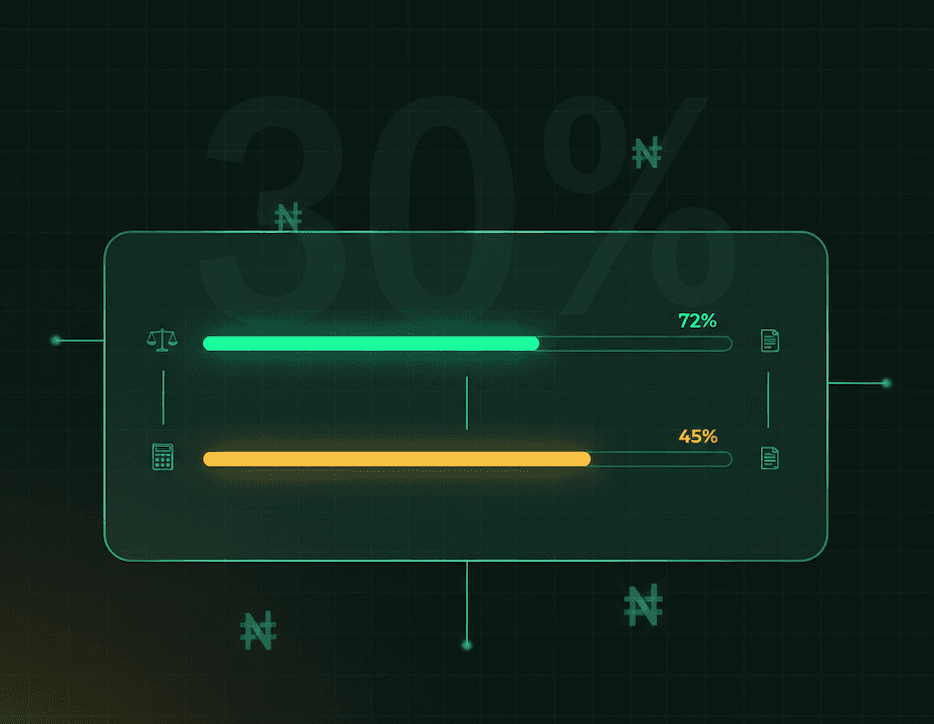
Tax-loss harvesting has always been a useful tool, but it has become especially relevant since the 2025 Finance Act raised the CGT rate to 30% under the new dual threshold system. At that rate, the tax savings from a well-timed harvest can be substantial.
How Tax-Loss Harvesting Works
The mechanics are simple. Here is the core process:
- You have realised capital gains from profitable trades you have already closed during the year.
- You identify positions in your portfolio that are currently sitting at an unrealised loss: stocks you bought at a higher price than their current market value.
- You sell those losing positions, converting the unrealised loss into a realised loss.
- The realised loss offsets your realised gains, reducing your net capital gains for the year.
- Lower net gains mean a lower tax bill, or potentially no tax at all.
The key insight is that you are not creating value out of thin air. You are choosing when to recognise a loss that already exists in your portfolio. The loss is real regardless; tax-loss harvesting simply ensures you recognise it at the most advantageous time.
A Quick Illustration
Suppose you sold shares of DANGCEM earlier in the year for a ₦5,000,000 gain. You also hold shares of another company that are currently worth ₦2,000,000 less than what you paid. If you sell that losing position before year-end, your net gains drop from ₦5,000,000 to ₦3,000,000. At a 30% tax rate, that is a potential saving of ₦600,000.
Why It Matters Under the Dual Threshold System
The 2025 Finance Act introduced a dual threshold system for Capital Gains Tax on securities. Understanding both thresholds is critical before you harvest any losses, because the strategy affects each one differently.
The Two Thresholds
Under the current rules, both of the following thresholds must be exceeded before the 30% CGT rate applies:
- Proceeds Threshold: ₦150,000,000 — The total value of all your disposal proceeds (i.e. the amount you received from selling) over a rolling 12-month window.
- Gains Threshold: ₦10,000,000 — The total net capital gains you have realised in the current calendar year (January to December).
If you exceed only one threshold but not the other, you owe ₦0 in CGT. If you remain below both, you also owe nothing. The 30% rate only kicks in when both thresholds are breached simultaneously.
The Strategic Trade-Off
This is where tax-loss harvesting in Nigeria gets interesting, and where many investors trip up.
Harvesting reduces your gains but increases your proceeds. When you sell a losing position, the sale proceeds count towards your ₦150,000,000 proceeds threshold, even though the trade itself generated a loss. At the same time, the realised loss reduces your net gains, potentially keeping you below the ₦10,000,000 gains threshold.
This creates a genuine strategic decision:
- If you are well below the proceeds threshold (say, ₦40,000,000 in total sales for the year), harvesting losses is almost always beneficial. The additional proceeds from selling losers will not push you anywhere near ₦150,000,000, and the reduction in net gains could keep you below ₦10,000,000.
- If you are approaching the proceeds threshold (say, ₦140,000,000), you need to be more careful. Selling a losing position with ₦15,000,000 in proceeds would push you over ₦150,000,000. If your gains are also above ₦10,000,000, you have just triggered the full 30% tax.
- If you are already above both thresholds, harvesting is straightforwardly beneficial: every naira of loss you realise directly reduces your tax bill at 30%.
The bottom line: always check your position against both thresholds before executing a harvest.
Step-by-Step Process
Step 1: Review Your Portfolio for Unrealised Losses
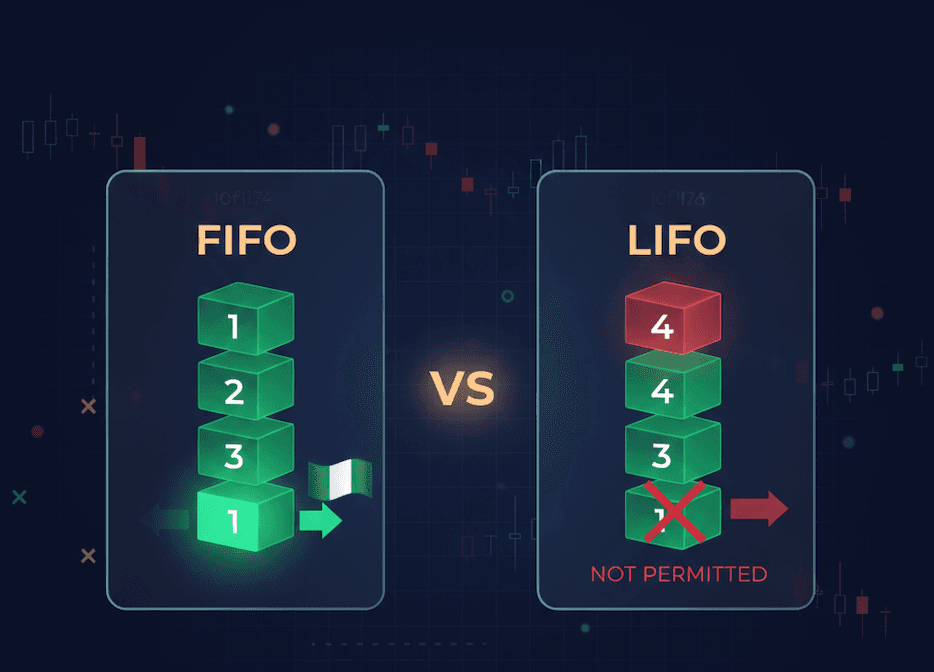
Go through every open position in your portfolio and identify stocks where the current market value is below your cost basis (what you originally paid, calculated using the FIFO method as required by Nigerian tax law). These are your harvesting candidates.
Focus on positions with meaningful losses. A stock sitting at a ₦50,000 loss is rarely worth harvesting once you account for brokerage fees and the SEC/NSE transaction levies.
Step 2: Calculate Your Year-to-Date Gains and Proceeds
Before you harvest anything, you need to know where you stand:
- Total realised gains for the year: Add up all the capital gains from trades you have already closed in the current calendar year.
- Total proceeds for the rolling 12 months: Add up the sale proceeds from every disposal in the last 12 months (not just the calendar year, since the proceeds threshold uses a rolling window).
These two numbers tell you how close you are to each threshold and whether harvesting makes strategic sense.
Step 3: Identify Which Losing Positions to Sell
Not every losing position is a good harvesting candidate. Consider:
- Size of the loss: Prioritise positions with the largest unrealised losses, as these provide the greatest tax benefit.
- Your investment thesis: Is the stock fundamentally broken, or is it temporarily down? If you still believe in the company long-term, you may want to repurchase after selling (more on this below).
- Transaction costs: Factor in brokerage commissions, SEC fees, and CSCS charges. If the transaction costs eat up most of the tax saving, the harvest is not worthwhile.
- Impact on both thresholds: Model the effect on your proceeds total, not just your gains total.
Step 4: Execute the Sale Before Year-End
Since the gains threshold operates on a calendar year basis (January to December), you must complete the sale before 31 December for the loss to count against the current year's gains. Do not leave this to the last trading day: settlement times on the NGX mean you should execute well before the deadline.
Place your sell orders through your broker as you normally would. The loss is realised on the trade date, not the settlement date, but it is prudent to allow a buffer.
Step 5: Consider Repurchasing
Here is something many Nigerian investors do not realise: Nigeria does not currently have a wash-sale rule. In the United States, the IRS disallows a loss if you repurchase the same security within 30 days. No equivalent rule exists under Nigerian tax law as of the 2025 Finance Act.
This means you can, in theory, sell a stock to harvest the loss and immediately buy it back, maintaining your position while still claiming the tax benefit. However, exercise caution:
- Transaction costs add up: Selling and repurchasing means paying brokerage and regulatory fees twice.
- Price movement risk: The stock price may move against you between the sell and the repurchase, particularly for less liquid NGX-listed shares.
- Regulatory changes: Tax rules evolve. The absence of a wash-sale rule today does not guarantee its absence tomorrow. Document your transactions carefully.
If you believe in the stock long-term, repurchasing can make sense. If you were looking for an exit anyway, the harvest gives you a tax-efficient reason to close the position.
Worked Example: Saving ₦3,600,000 in CGT
Let us walk through a realistic scenario for a Nigerian investor.
The Situation
Adaeze is an active trader on the NGX. By October 2026, her year-to-date position looks like this:
| Amount | |
|---|---|
| Total realised gains (calendar year) | ₦12,000,000 |
| Total disposal proceeds (rolling 12 months) | ₦180,000,000 |
| Unrealised loss in MTNN position | ₦1,800,000 |
| Unrealised loss in BUACEMENT position | ₦1,200,000 |
Adaeze has exceeded both thresholds: her proceeds (₦180,000,000) are above ₦150,000,000, and her gains (₦12,000,000) are above ₦10,000,000. Without action, she faces a CGT bill of:
₦12,000,000 x 30% = ₦3,600,000
The Harvest
Adaeze decides to sell both her MTNN and BUACEMENT positions to harvest the combined ₦3,000,000 in losses. After the sales:
| Before Harvest | After Harvest | |
|---|---|---|
| Realised gains | ₦12,000,000 | ₦9,000,000 |
| Proceeds (rolling 12 months) | ₦180,000,000 | ₦183,500,000 |
| Above gains threshold (₦10M)? | Yes | No |
| Above proceeds threshold (₦150M)? | Yes | Yes |
Her proceeds increased slightly (from the sale value of the losing positions), but critically, her net gains dropped to ₦9,000,000, below the ₦10,000,000 gains threshold.
The Result
Because the 30% CGT rate only applies when both thresholds are exceeded, and Adaeze is now below the gains threshold:
- CGT owed: ₦0
- Tax saved: ₦3,600,000
She converted ₦3,000,000 in paper losses into ₦3,600,000 in real tax savings. The losses were already present in her portfolio; she simply chose the right moment to recognise them.
If Adaeze still believes in MTNN and BUACEMENT long-term, she can repurchase the shares. Her new cost basis will be the lower repurchase price, which means she may face a larger gain when she eventually sells at a profit in a future year. But that is a future year's problem, and she has saved ₦3,600,000 today.
Common Mistakes to Avoid
Selling Solely for Tax Reasons
Tax-loss harvesting should complement your investment strategy, not replace it. If you sell a fundamentally strong stock just to harvest the loss and then repurchase it at a higher price a week later, you may end up worse off after transaction costs. Always weigh the tax benefit against the investment merit of the trade.
Ignoring Transaction Costs
Brokerage commissions, SEC fees, CSCS charges, and stamp duties all eat into your tax savings. For smaller losses, the cost of executing two trades (sell and repurchase) can exceed the tax benefit. Run the numbers before you act.
Accidentally Triggering the Proceeds Threshold
This is the most common mistake specific to Nigeria's dual threshold system. An investor below the ₦150,000,000 proceeds threshold decides to harvest losses across multiple positions. The sale proceeds from those harvests push them over ₦150,000,000. If their gains were already above ₦10,000,000, they have just triggered the full 30% CGT on all their gains — the opposite of what they intended.
Always model the impact on both thresholds before you sell.
Waiting Until the Last Day
The NGX has settlement periods, and liquidity can thin out near year-end. If you wait until 31 December to harvest, you risk failed trades or unfavourable pricing. Start reviewing your portfolio for harvesting opportunities in October or November.
Forgetting to Document Everything
Keep detailed records of every harvest: the original purchase date and price, the sale date and price, the calculated loss, and any repurchase. Nigerian tax authorities can request this documentation, and clean records make filing straightforward.
How Journaira Helps
Manually tracking unrealised losses, year-to-date gains, and your position against both thresholds across multiple broker accounts is tedious and error-prone. This is exactly the kind of problem Journaira was built to solve.
Tax Harvesting Wizard
Journaira's tax harvesting wizard automatically scans your portfolio and identifies positions with unrealised losses that are candidates for harvesting. It ranks them by the size of the potential tax benefit, so you can focus on the opportunities that matter most.
Dual Threshold Impact Preview
Before you execute any harvest, Journaira shows you exactly how the sale would affect both your proceeds and gains thresholds. You can see whether the harvest would keep you below the gains threshold, whether it would push you over the proceeds threshold, and what the net tax impact would be. No spreadsheets required.
Automated FIFO Cost Basis
Nigerian tax law requires the FIFO (First In, First Out) method for calculating cost basis. Journaira tracks every acquisition lot and automatically applies FIFO when calculating your gains and losses, so you never have to worry about getting the cost basis wrong.
Year-Round Monitoring
Tax-loss harvesting is not just a December activity. Journaira monitors your thresholds throughout the year and alerts you when harvesting opportunities arise, giving you time to make considered decisions rather than rushing at year-end.
This article is for educational purposes only and does not constitute tax, legal, or financial advice. Tax rules are subject to change, and individual circumstances vary. Consult a qualified tax adviser before making any decisions based on the information in this article. Journaira is a trade journaling and analytics platform — we help you track and analyse, but we do not provide personalised tax advice.